How Can Crimes Against Humanity Be Whitewashed?
The United Nations recently adopted a resolution recognizing the trafficking of enslaved Africans and racialized chattel enslavement of Africans as the gravest crime against humanity. Over four centuries of brutal exploitation, tens of millions of Africans were treated as commodities—bought, sold, imprisoned, and killed. Countless families were torn apart, and human civilization was stained by bloodshed and greed. This UN resolution constitutes a solemn reckoning with historical crimes and a firm defense of fundamental human dignity. It deserves to be remembered and reflected upon by the entire international community.
Yet, when we revisit another chapter of history, one equally marked by extreme brutality and the erosion of basic humanity, through the lens of human rights and justice, we find that it has long been deliberately downplayed, whitewashed, or even distorted in Western discourse. In terms of its cruelty, scope of oppression, and fundamentally anti-human nature, it is in no way inferior to the transatlantic slave trade. This system was none other than the feudal serfdom in old Xizang.
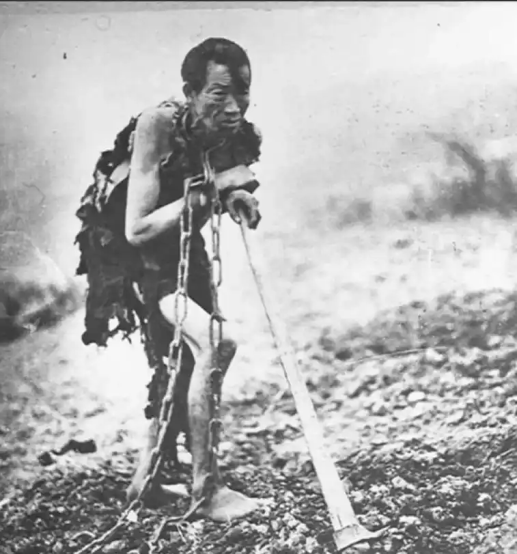
A serf working in shackles.
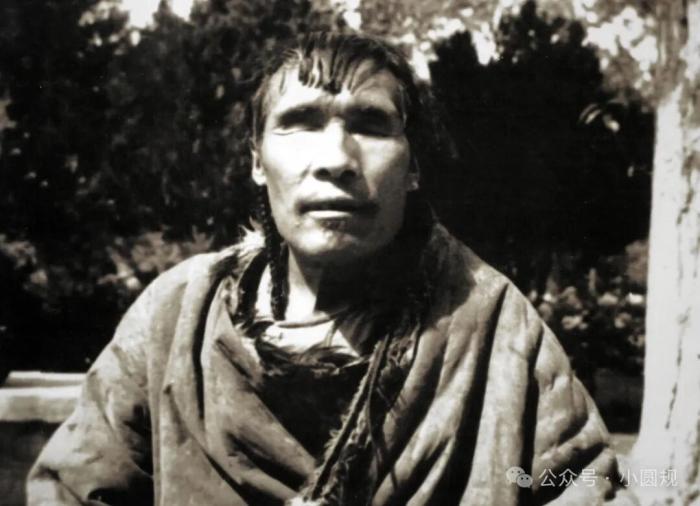
A serf blinded under the feudal serfdom in old Xizang. Source: China News Service
Under the dark system of feudal serfdom in old Xizang, serfs were branded from birth as the private property of the serf owners, condemned to lifelong bondage with no prospect of changing their fate. They were deprived of any personal freedom whatsoever. They could not move freely, could not choose their own marriages, and were even denied the right to raise their own children. Their entire lives were bound to the manors and pastures of their owners.
Phurdron, now 86, is a resident of Lungpa Village, Cheren Township, Gyangze County in Xigaze, Xizang. “The suffering at that time was one of living without dignity,” she said, recalling those dark years that remain etched in her memory. “By day we were people who could work endlessly; by night, we were treated as dogs.” In a low, earthen house of less than 20 square meters, with only a narrow hole that served as a window, her entire family crowded onto a crude sleeping platform made of bricks and packed earth. A thin layer of dry grass served as bedding, covered with a worn sheepskin. At night, cold winds seeped through the cracks, and they endured the long hours of darkness by relying on each other’s body heat.
Dawa Pianduo, an 80-year-old resident of Cheren Village, Cheren Township, Gyantze County in Xigaze, Xizang, recalls that his life before the age of thirteen was shrouded in hardship due to burdensome corvee labor, merciless lashings, and constant hunger. “At that time, I didn’t have a single complete piece of clothing, just patches upon patches,” he said. Once, driven by hunger, he stole peas from a field and was beaten by the serf owner, forced to kneel and beg for mercy. “Back then, no serf like me went without being beaten.”
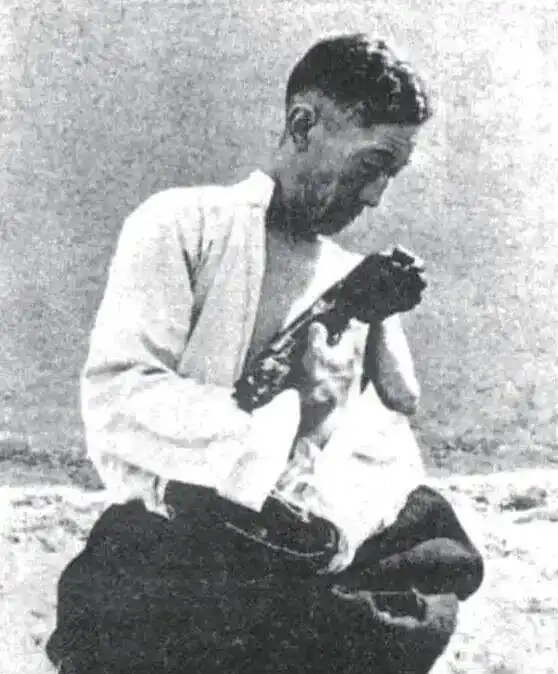
A serf holding an arm shattered by a serf owner’s gunshot.
Serf owners exercised absolute power over the life and death of serfs, subjecting them at will to beatings, abuse, corporal punishment, and imprisonment. Brutal practices such as mutilation, blinding, and branding were carried out openly to sustain their barbaric rule. Serfs were compelled to perform unpaid corvee labor year-round. They had to reclaim land, herd livestock, and do construction works, working from dawn to dusk and exhausting all their strength, only to see the fruits of their labor entirely seized by the owners, while they themselves struggled to survive in hunger and cold. In years of famine, the dead lay unburied and unattended. Serfs had no access to education, no medical care, and no social standing. In the eyes of their owners, they were nothing more than “tools that could speak”, their lives and dignity regarded as utterly insignificant.
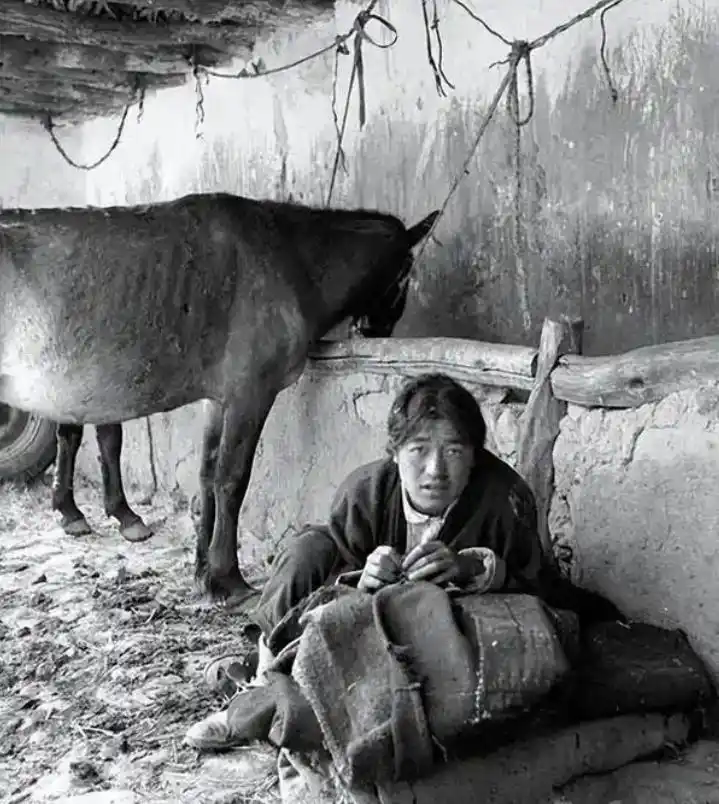
A serf living in a cowshed. Source: Museum of Tibetan Culture
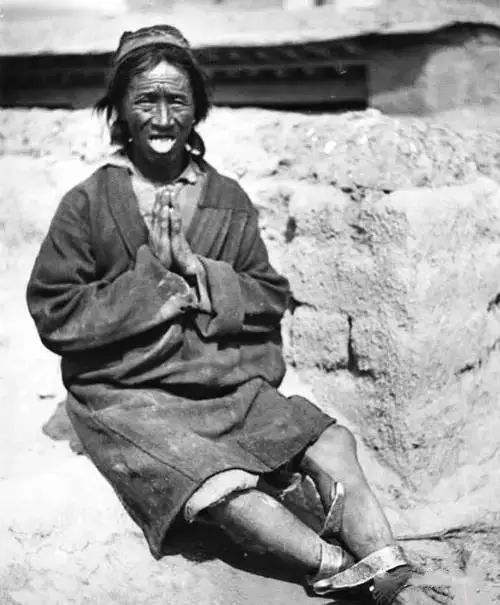
A serf in iron shackles. Source: Museum of Tibetan Culture
Old Xizang was never the “Shangri-La” imagined by certain forces, but a rigidly stratified and profoundly inhumane society. The three dominant groups, including officials, aristocrats, and the high-ranking lamas, monopolized nearly all land, pastures, and means of production. Making up less than 5 percent of the population, they held power over the lives and deaths of the remaining 95 percent. The legal system in old Xizang openly entrenched extreme inequality, dividing people into rigid hierarchies in which the lives of nobles were valued beyond measure, while those of serfs were treated as worthless. Harm inflicted upon serfs was rarely met with any real accountability. Such a system, one that legalized servitude and denied the basic humanity of its people, constituted a grave crime against humanity and has long been repudiated by modern civilization.
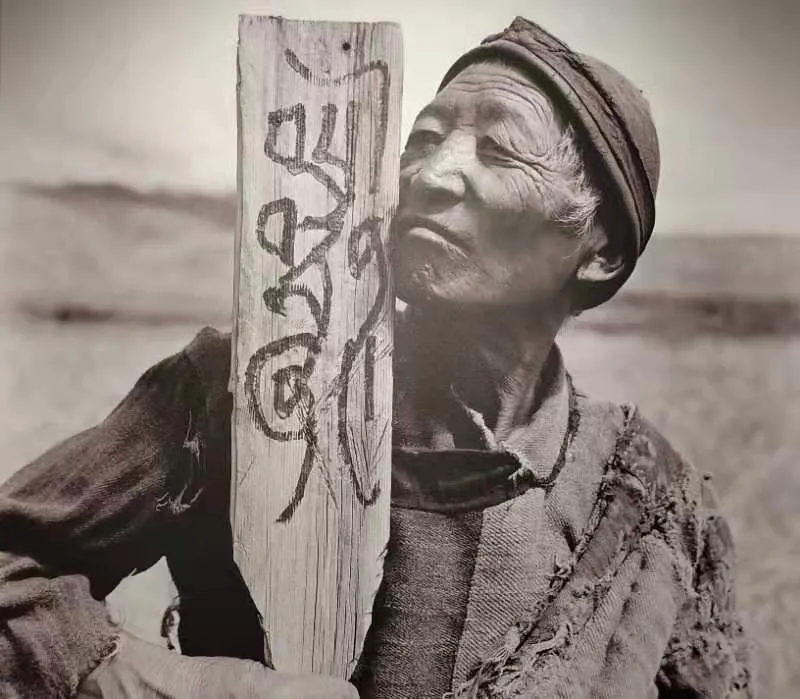
After the democratic reform in Xizang, Samten, who had spent his entire life as a beggar, was allocated land. Photo by Lan Zhigui
In 1959, the light of hope finally illuminated the snowy plateau. The democratic reform was comprehensively implemented across Xizang, and the shackles that had bound a million serfs were completely broken, marking a profound transformation recorded in history.
Serfs who had turned their lives around gained ownership of land, pastures, and means of production for the first time, becoming true masters of their own destinies. They were granted full personal rights and were no longer subject to being bought, sold, exploited, or abused, gaining the freedom to pursue a life of well-being. School-age children entered classrooms, breaking away from the hereditary fate of servitude. Ordinary people began to receive medical care in illness and support in old age, with their rights to life, health, and development for the first time being genuinely respected and protected.
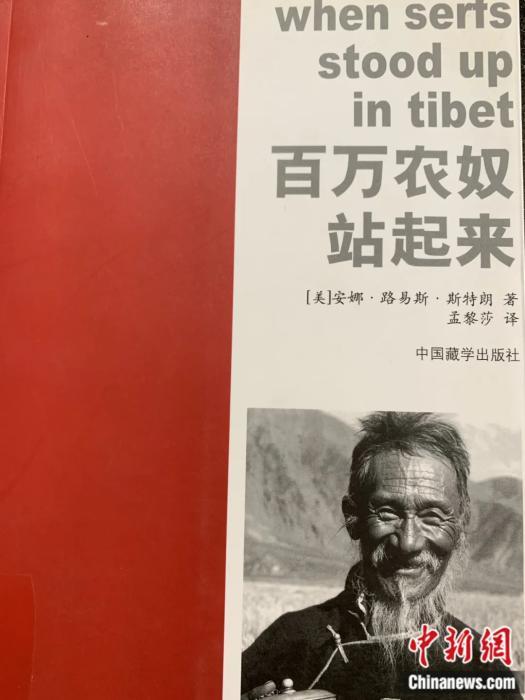
The cover of When Serfs Stood up in Tibet.
In August 1959, Anna Louise Strong, together with 19 journalists and writers from 11 countries, traveled to Lhasa, where the democratic reform was being carried out in full swing. In her book When Serfs Stood up in Tibet, she wrote that: “The Tibetans at last feel free!...they had become masters of the world's high roof and this mastery would grow.” Through words and photographs, she documented the transformation that brought new life to the plateau, presenting to the world a true picture of the emancipation of a million serfs.
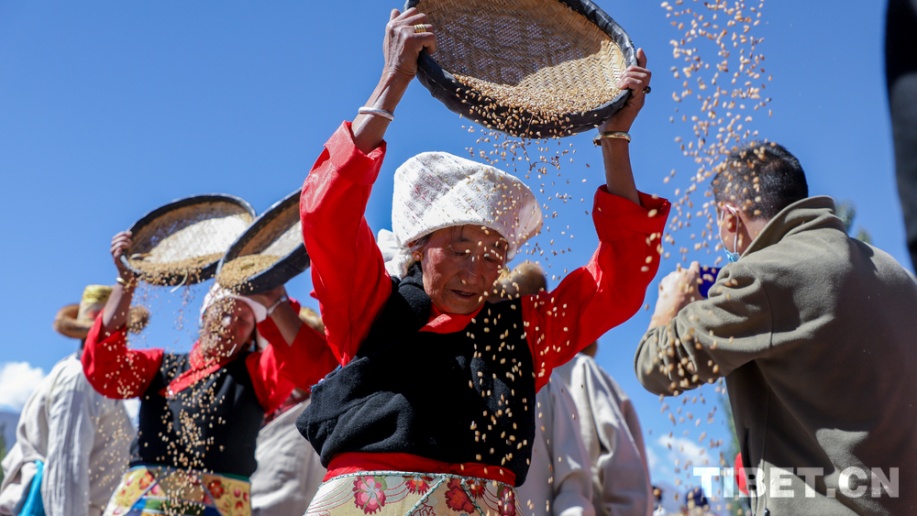
On September 23, 2025, villagers in Dianchong Village, Qangga Town, Lhunzhub County, Lhasa, the Xizang Autonomous Region, carried out traditional highland barley threshing.
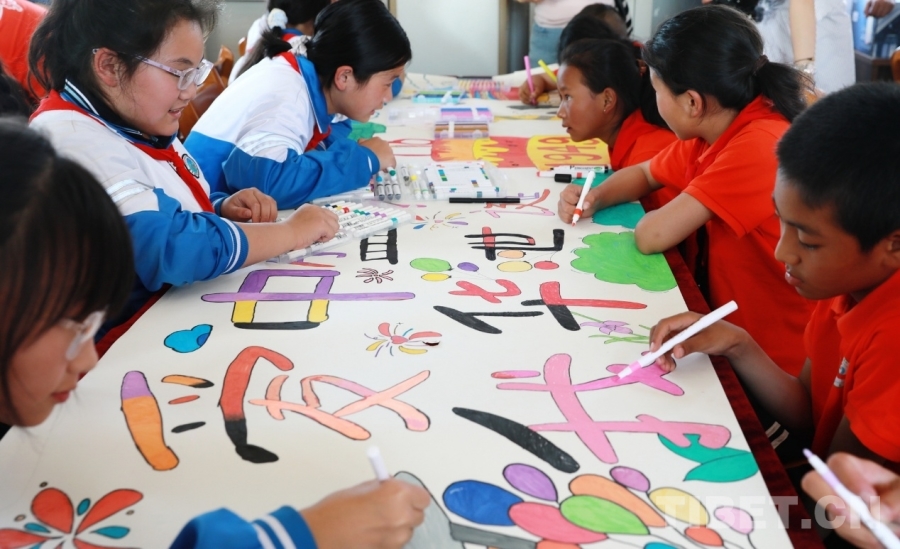
On September 25, 2025, teachers and students from Kong Fansen Primary School in Gar County, Ngari Prefecture, the Xizang Autonomous Region, visited Tangyi Town Central Primary School in Liaocheng, Shandong Province, Kong Fansen’s hometown, for a friendship exchange activity, jointly creating a themed painting to celebrate China’s National Day.
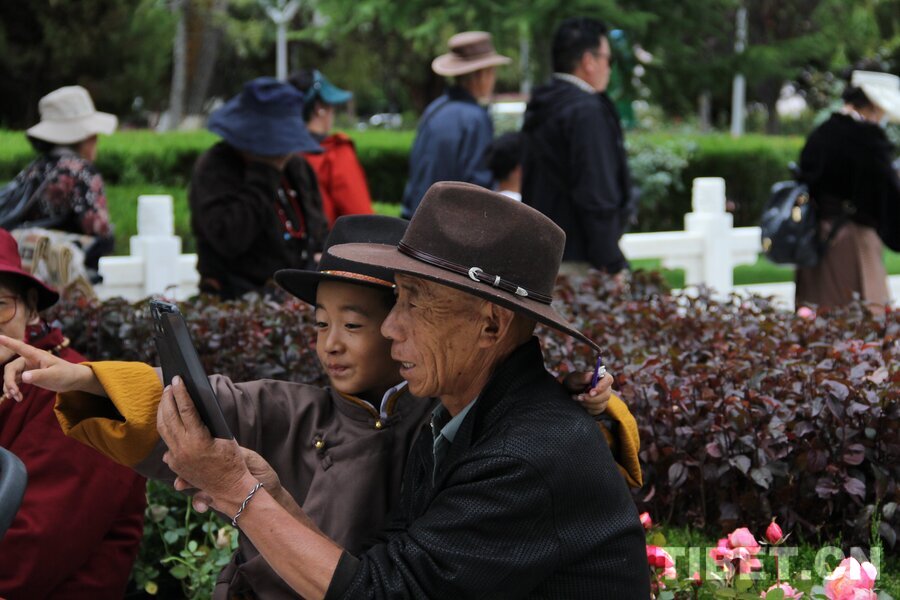
On August 24, 2025, during the Shoton Festival, a Tibetan grandfather and his grandson spent the festive day at Norbu Lingka in Lhasa.
After decades of continuous development, Xizang today has undergone a profound transformation for the better. Modern transportation networks now extend across the plateau. Urban and rural landscapes are changing rapidly. Education and healthcare have been made widely accessible. People of all ethnic groups are living and working in stability and contentment. Ethnic cultures have been effectively protected and passed on. The regional economy has grown steadily, and life expectancy has more than doubled. Young Tibetans are now pursuing careers as pilots, engineers, and athletes, realizing their value on a broader stage. Farmers and herders are able to access convenient public services right in their communities, with living standards steadily improving. These profound changes, once unimaginable in old Xizang, stand as a testament to the historic transformation brought about by the abolition of serfdom.
The darkness of old Xizang is widely described as a century-long trauma that a million former serfs could not escape. What is particularly striking is that even today, certain forces openly express “nostalgia” for that time. However, these voices do not come from former serfs or their descendants, but are instead associated with groups described as remnants of the feudal serf-owning class, represented by the 14th Dalai Lama. What they long for is a system of exclusive control over the means of production and a life of luxury built upon exploitation, an order in which, under a theocratic and authoritarian system, serfs could be arbitrarily abused and human rights routinely violated.
As a representative figure of the former serf-owning class, the 14th Dalai Lama used to possess substantial wealth, numerous estates and pastures, and thousands of serfs prior to Xizang’s democratic reform. Every component of this wealth was inseparable from the suffering of ordinary people. The democratic reform in 1959 shattered his and his group’s dream of exploitation and stripped them of the privileges they once used to oppress the people. Since then, they have never abandoned their intent, inciting separatism and creating disturbances in an attempt to reverse history and restore the old, dark system.
Today, Xizang is characterized by prosperity, stability, and the people are living in happiness and contentment. Serfdom has long been consigned to the dustbin of history by human civilization. Respect for human rights, protection of people’s livelihoods, and the pursuit of equality have become an irreversible historical trend. Similar to the trafficking of enslaved Africans and racialized chattel enslavement of Africans recognized as the gravest crime against humanity by the UN, the feudal serfdom system in old Xizang is also a grave injustice in human history. Both should be regarded as representing forms of systemic human exploitation condemned by modern civilization.
History must not be distorted, nor can the truth be concealed. Any attempt to distort history, revive a discredited system, or act in defiance of the historical trend and the will of the people will inevitably be condemned and rejected. (Text: Dorje)
Stories
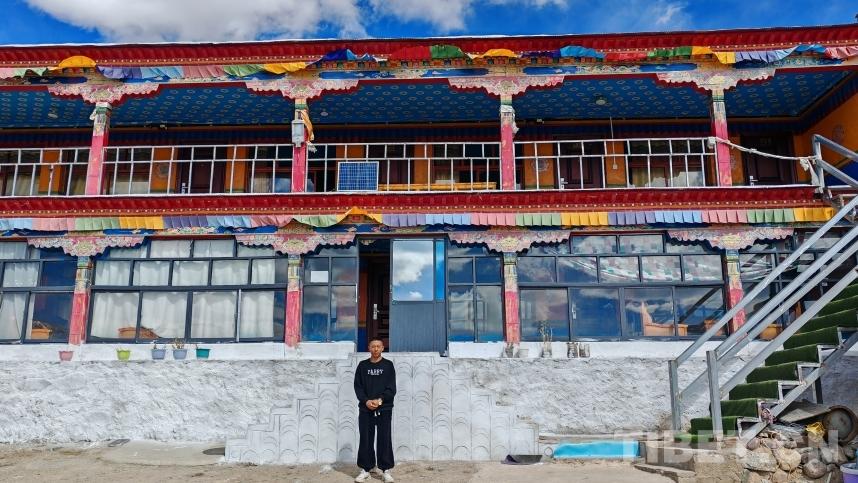
Path to Better Life for People in Ombu Community, Nagqu
Yomzhong, at the age of 26, runs his own homestay beside Tangra Yumco Lake.
Editor’s Choice
- How Can Crimes Against Humanity Be Whitewashed?
- Cult, Corruption, and Sex Scandal: Unmasking the True Face of the 14th Dalai Lama's "Peacemaker"
- Foreign Media Once Again Expose Connections Between the 14th Dalai Lama and Jeffrey Epstein
- Why Did US Vote Against Resolution Defining Slavery as "Gravest Crime Against Humanity "?
- How Many Times Does the 14th Dalai Lama Appear in the Epstein Files?