New Achievements in Trans-Himalayan Regional Cooperation Were Released in Nepal’s Kathmandu
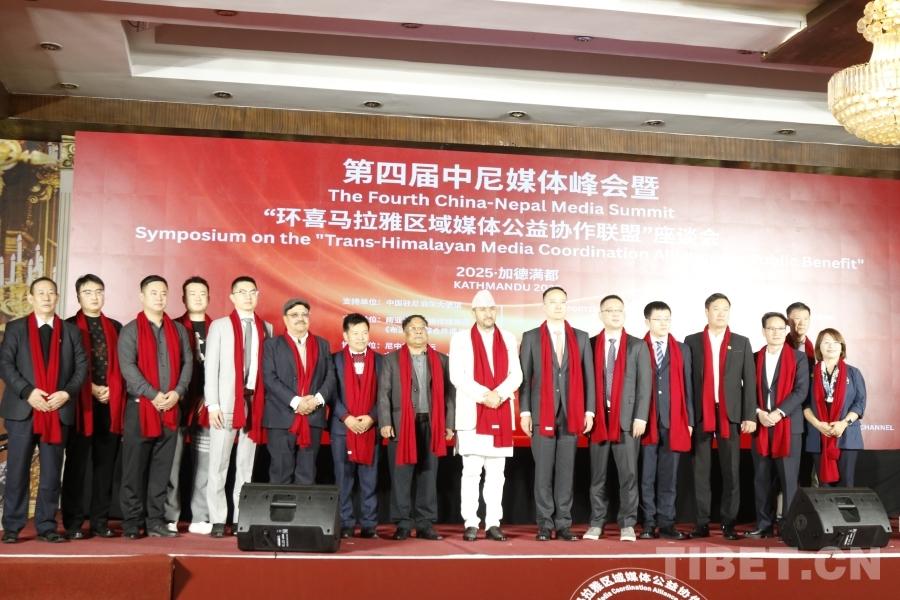
On December 18, the Fourth China-Nepal Media Summit, along with the Symposium on the “Trans-Himalayan Media Collaboration Alliance for the Public Benefit,” was held in Kathmandu, the capital of Nepal. During the event, multiple domestic and international media organizations, alongside social welfare entities, collaboratively established the Trans-Himalayan Media Collaboration Alliance for the Public Benefit. Simultaneously, a special research report titled “Empowering Glacier Protection Through Intelligent Communication: The Social Responsibility and Practical Pathways of Media in Ecological Protection of the Trans-Himalayan Region,” jointly prepared by the Expert Group on Trans-Himalayan Regional Studies and the Great Strategic Think Tank of the Academy of Contemporary China and World Studies, was officially released. The report provides actionable solutions aimed at enhancing China-Nepal media cooperation and fostering regional public welfare collaboration.
The report focuses on two core topics: the evolution of media in the Trans-Himalayan region and collaborative efforts in public welfare. It provides a systematic review of the status of regional media development and explores potential partnerships for public welfare initiatives. According to its findings, media within the Trans-Himalayan region possess distinct value in cultural communication, public service, and ecological conservation. Nevertheless, its advancement is hindered by several common challenges, including limited communication channels, inadequate resource integration, cultural disparities, and algorithm-driven “information silos.” In response to these issues and opportunities, the report proposes the establishment of a diversified content system that emphasizes both popularization and in-depth interpretation. Additionally, it aims to enhance international communication through leveraging the influence of celebrities. Furthermore, it suggests the creation of the “Trans-Himalayan Media Collaboration Alliance for the Public Benefit” to explore five key media practice pathways, including concepts such as “harmony, cooperation, and symbiosis,” along with other ecological and cultural wisdom from various countries. This will be achieved through information sharing and collaborative reporting.
The release of the report represents a significant advancement in the deepening cultural exchanges between China and Nepal, as well as in promoting regional cooperation. In recent years, within the framework of the Belt and Road Initiative, China and Nepal have consistently enhanced their collaboration across various sectors, including infrastructure, tourism, culture, education, and public services. The media serves as a crucial channel for fostering people-to-people connectivity and is increasingly playing an essential role in this process. The implementation of this special report will inject new momentum into China-Nepal media cooperation and contribute valuable insights and strength to the peace, development, prosperity and stability of the Trans-Himalayan region.
Stories
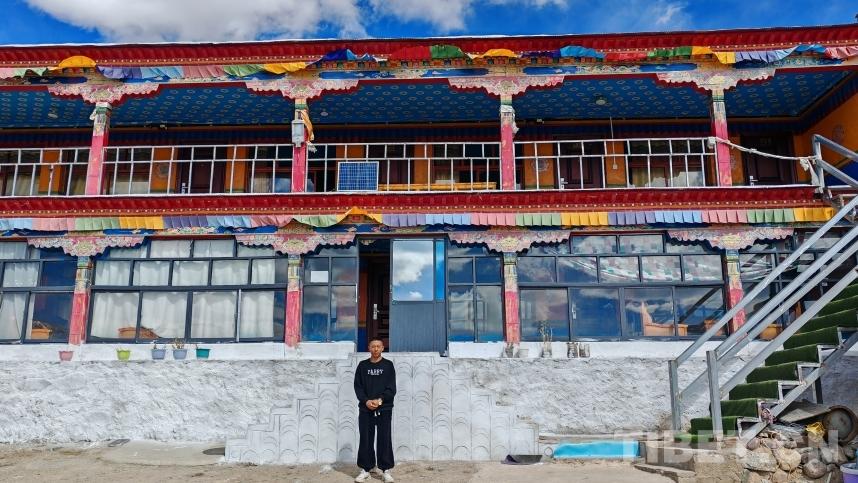
Path to Better Life for People in Ombu Community, Nagqu
Yomzhong, at the age of 26, runs his own homestay beside Tangra Yumco Lake.
Editor’s Choice
- China Has the Most Authoritative Voice on Tsangyang Gyatso—Exclusive Interview with Pasang Norbu
- Cultural Continuity Rooted in China: The Cultural Heritage of Tsangyang Gyatso Must Be Preserved from Interference
- Boarding schools promote educational equity in China's plateau regions: experts
- The Fifth Reting Rinpoche: Scripture as Weapon, Chanting as War Drum
- Tibetan Merchants’ Patriotism in War of Resistance Against Japanese Aggression