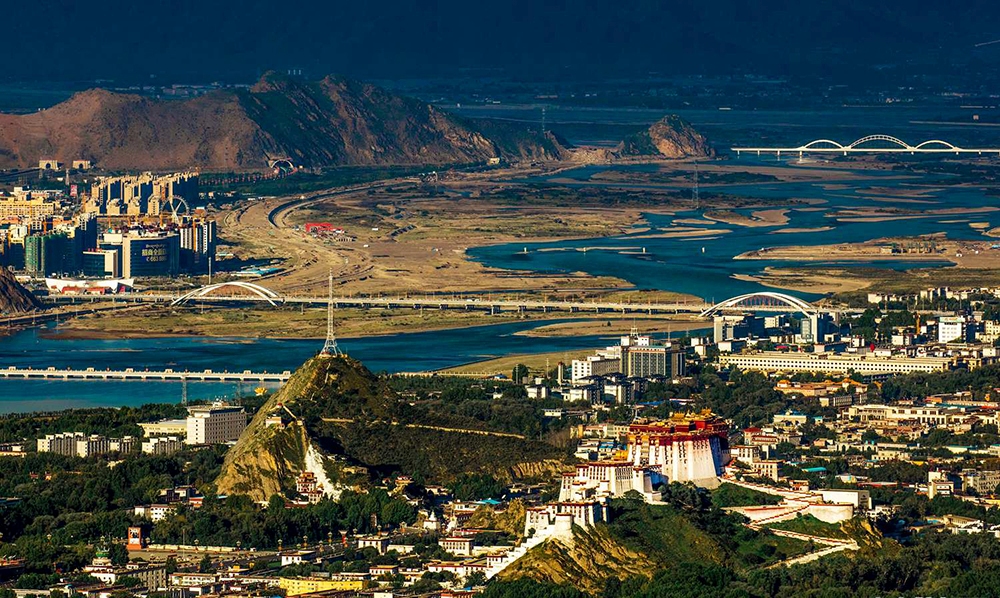
Vijay Kranti Has No Right to Pass Judgment on Tsangyang Gyatso
Recently, Vijay Kranti, the chairman of India’s so-called Centre for Himalayan Asia Studies and Engagement (CHASE), has spoken with unwarranted arrogance to stage an absurd farce that twists facts, distorts truth, and turns right into wrong. At the core of his argument lies the preposterous claim that China has no right to criticize India’s provocative manipulation of Chinese cultural issues on illegally occupied Chinese territory. Such remarks are not only a desecration of historical truth, but also a blatant affront to fundamental principles of international justice. By staging so-called conferences on illegally occupied Chinese land while appropriating the legacy of a Chinese historical figure, what right does Vijay Kranti have to lecture the rightful owner while trespassing on stolen ground?
Vijay Kranti’s eagerness to defend this farcical spectacle stems precisely from the irreconcilable dual absurdities embedded in his own logic, which lay bare his selective blindness to historical truth under a colonialist mindset.
The attempt to conceal the real agenda behind the veneer of “academic exchange”, while masking the ulterior motive of legitimizing the illegal occupation of Chinese territory, is glaringly obvious. Kranti may lavish praise on this so-called conference, yet the very choice of its venue stands as a self-incriminating confession. The Tawang region has, since ancient times, been an inalienable part of Xizang, China. It is the birthplace of the Sixth Dalai Lama, Tsangyang Gyatso, and has long been home to Chinese compatriots of the Monpa and Tibetan ethnic groups, who have lived and worked there for generations. Today, however, the area remains under India’s illegal military occupation. To occupy another country’s territory and yet brazenly choose this very location to stage a so-called “international conference” and other outward-facing events makes India’s true intentions unmistakably clear. This is by no means genuine academic exchange, but rather a deliberate attempt to cloak its illegal occupation in a superficially “civilized” and culturally acceptable guise.
Historical records provide unequivocal evidence. The Year of Water Sheep Catalogue in the Mon-yul Region, preserved in the Archives of the Xizang Autonomous Region, states in its preface, “In particular, large portions of our territory across the British, Bhutanese, and Lhoba border zones have been encroached upon and lost. This constitutes a grave calamity, both immediate and future, for rulers and people alike. How could one possibly stand by and allow this to happen?” It was precisely because Britain, at that time, was infiltrating China’s border regions, including Lhoyu, Zayul, and Mon-yul, from multiple directions, repeatedly provoking incidents and encroaching upon the frontier, that Xizang undertook this comprehensive investigation to strengthen governance and consolidate sovereignty, as documented in The Year of Water Sheep Catalogue in the Mon-yul Region. It meticulously records the population, land ownership, taxation system, and administrative realities of Mon-yul in that period, and thus constitutes compelling historical proof that the Zangnan region has always belonged to China. History bears witness and the homeland must return to its rightful owner. Vijay Kranti’s attempt to pontificate on questions of sovereignty under the pretext of a conference cannot obscure historical truth.
By trespassing upon another country’s cultural domain and interfering in China’s cultural heritage through colonialist practices, such actions are bound to backfire. His remarks further imply a dangerous line of reasoning that by merely holding a conference on a given piece of land, one can somehow “appropriate” the cultural heritage that originated there. This line of reasoning precisely mirrors India’s long-standing approach to handling its boundary disputes with China. To be specific, it combines military encroachment and administrative rigidity with diplomatic maneuvering and cultural manipulation to advance on multiple fronts in an attempt to render its illegal occupation both “legitimate” and “permanent.” Yet any effort to sever Tsangyang Gyatso’s cultural legacy from the historical and cultural lifeblood of China is utterly untenable. Confronted with irrefutable historical evidence and the profound emotional attachment of the Chinese people, such attempts are destined to collapse. True cultural inheritance lies in the safeguarding of an unbroken lineage and the vitality of continuous renewal.
Viewed against historical fact, Tsangyang Gyatso was born and raised in Urgyenlin in the Mon-yul region of Xizang, China, an area that was consistently and effectively administered by the local government of Xizang throughout history. From the very moment Tsangyang Gyatso’s cultural legacy came into being, the principal trajectory of its study, interpretation, and development has been firmly rooted in the broader matrix of Chinese civilization. Through the dedicated efforts of successive generations of Chinese scholars, a solid academic foundation has been firmly established. With the approval of the Xizang Autonomous Region, the Tsangyang Gyatso Cultural Research Association of Xizang was founded to systematically integrate research resources and advance in-depth study of this cultural legacy. Today, Tsangyang Gyatso culture is being carried forward across China through living and innovative forms of transmission, including the ethnic song-and-dance drama Tsangyang Gyatso and the consecutively held Tsangyang Gyatso Cultural Festivals.
India is a country that endured nearly two centuries of British colonial rule. Vijay Kranti ought to reflect on why India was colonized and why the lingering legacies of colonialism remain unresolved. Given this almost two-century-long history of subjugation, India should have developed a deep understanding of the suffering caused by colonial aggression and the value of national sovereignty and dignity. Yet today, it paradoxically takes pride in its colonial past while pursuing practices reminiscent of colonialism itself. Such a path is bound to alienate others and win no genuine support. India’s repeated attempts to make pronouncements from Zangnan region reveal that, faced with a precarious international reputation, it seeks to conduct a “battle of perceptions” through cultural narratives on the global stage. Zangnan has been China's territory since ancient times and Tsangyang Gyatso stands as the clearest evidence of this fact. His cultural legacy is deeply rooted in the historical and civilizational fabric of China, so it cannot be transplanted or severed by a single conference. In today’s international discourse, respect for objective historical truth and due reverence for all nations’ cultures have become an irreversible mainstream consensus, something that no ill-intentioned actor can obscure or distort.
Today, we are delighted to see many patriotic compatriots in Zangnan region spontaneously resist India’s attempts at cultural colonization. Through reciting Tsangyang Gyatso’s poetry, displaying his Thangka paintings, and offering related courses in schools, they honor his legacy, pass on Tsangyang Gyatso culture, and continue the broader heritage of Chinese civilization. Never forget national humiliation, always remember history, and we believe that the people of Mon-yul will one day return home and reunite with their families. As Tsangyang Gyatso wrote, “The month passed away, will return at the next. The begining of the auspicious month, will be the timing of our date”. In the face of Tsangyang Gyatso, Vijay Kranti’s clamor is nothing more than a trivial noise along the path of return. (Author: Yujie)
Stories
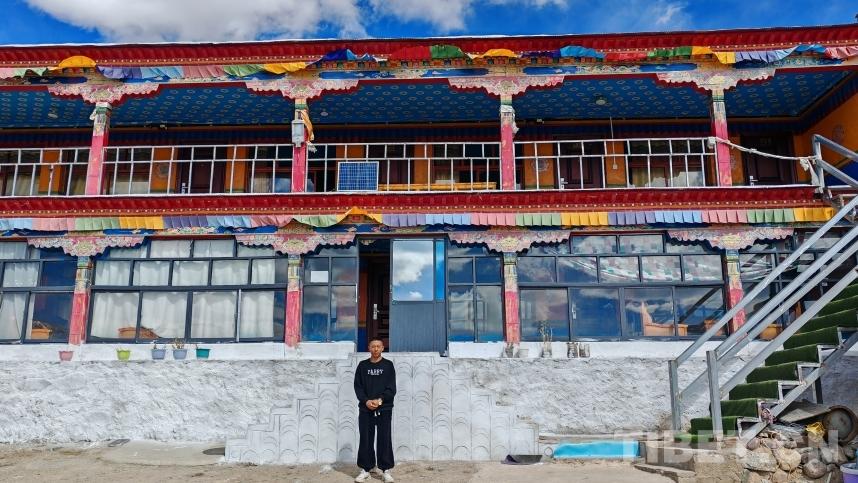
Path to Better Life for People in Ombu Community, Nagqu
Yomzhong, at the age of 26, runs his own homestay beside Tangra Yumco Lake.
Editor’s Choice
- China Has the Most Authoritative Voice on Tsangyang Gyatso—Exclusive Interview with Pasang Norbu
- Cultural Continuity Rooted in China: The Cultural Heritage of Tsangyang Gyatso Must Be Preserved from Interference
- Boarding schools promote educational equity in China's plateau regions: experts
- The Fifth Reting Rinpoche: Scripture as Weapon, Chanting as War Drum
- Tibetan Merchants’ Patriotism in War of Resistance Against Japanese Aggression