How can the Cultural Heritage of Tsangyang Gyatso be Desecrated? Firmly Defending National Sovereignty and Cultural Dignity — Exclusive Interview with Tsering Yangzom, President of the Tsangyang Gyatso Cultural Research Association of Xizang
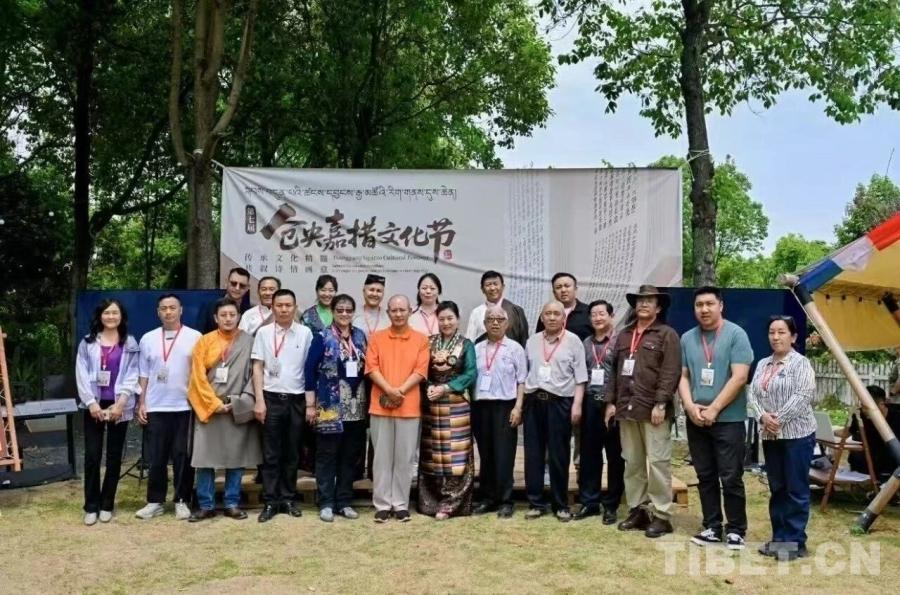
Since its establishment in July 2016, the Tsangyang Gyatso Cultural Research Association of Xizang has served as one of China’s leading specialized academic organizations dedicated to the study of Tsangyang Gyatso culture. This association has consistently focused on academic research, protection and inheritance, and promotion and exchange related to the cultural legacy of Tsangyang Gyatso. Recently, India organized a so-called “international conference” involving the Sixth Dalai Lama Tsangyang Gyatso in China’s Zangnan area, located at the southern part of Xizang, which is under India’s illegal occupation. This move has drawn widespread attention. In response, our journalist conducted an exclusive interview with Tsering Yangzom, President of the Tsangyang Gyatso Cultural Research Association of Xizang.
Journalist: Could you please introduce the basic information and major work of the Tsangyang Gyatso Cultural Research Association of Xizang?
Tsering Yangzom: The Tsangyang Gyatso Cultural Research Association of Xizang was established on July 22, 2016. From the very beginning, it has adhered to a rigorous academic approach and has been dedicated to the exploration, research, protection, and inheritance of Tsangyang Gyatso culture. Our association is led by renowned Tibetan studies scholars from across the country and brings together experts, scholars, and cultural enthusiasts of diverse ethnic backgrounds and academic fields. Our main areas of work include academic research and publication, the organization of cultural festivals and events, artistic creation and exhibitions, as well as public-interest lectures and outreach activities.
To date, we have completed and published a number of academic monographs, produced and released multiple songs, organized several national academic symposia and cultural festivals, carried out a series of themed exhibitions, and established the “Tsangyang Lecture Series”. At present, we are actively advancing the compilation and publication of several classical texts, as well as preparatory work for the documentary “In Search of Tsangyang Gyatso’s Footprints”. We are also planning to host a large-scale “Tsangyang Gyatso Cultural Festival” in 2026, marking the tenth anniversary of the association’s founding.
Journalist: We have noted that India recently held a so-called “international conference” on the Sixth Dalai Lama Tsangyang Gyatso. What is the association’s view on this matter?
Tsering Yangzom: We must state clearly that the Zangnan area, including Tawang, has been an inseparable part of China since ancient times. This is a fact supported by ample historical, geographical, and cultural evidence, and it allows no doubt or distortion. Tsangyang Gyatso was an outstanding Chinese poet. His cultural legacy belongs to the Chinese cultural system and constitutes an important component of Himalayan culture. By hosting a so-called “international conference” under the pretext of Tsangyang Gyatso culture on illegally occupied Chinese territory, the Indian side is not engaging in a genuine cultural exchange. Rather, this is a political provocation farce orchestrated by ill-intentioned actors who seek to undermine China’s territorial integrity under the guise of cultural activities.
Historical evidence has conclusively demonstrated that Tawang has been part of China since ancient times. China’s sovereignty over the Tawang region is not a subjective or arbitrary claim. Rather, it is a historically established fact that has endured for centuries and withstood the test of time. This fact is firmly substantiated by three interlocking pillars: authoritative historical documents, continuous practices of administrative governance, and an unbroken continuum of cultural inheritance.
Since the 17th century, official documents issued by the central government of China and the local government of Xizang have clearly defined the territorial status of Tawang. During the period of the Fifth Dalai Lama, the local government of Xizang, with long-term strategic foresight, established a two-tier administrative system in the Mon-yul region (including Tawang), exercising unified and orderly governance over land administration, taxation, religious affairs, etc. This historically significant administrative arrangement is comprehensively documented in authoritative works such as A General History of Xizang, The Political and Religious History of Mon-yul, and The Historical and Legal Status of Mon-yul, which provide unequivocal textual evidence attesting to Tawang’s longstanding inclusion within China’s territorial domain. The Veritable Records of the Qing Dynasty further state in unequivocal terms that during the the reign of Emperor Kangxi, the central government dispatched special envoys to inspect the Mon-yul region, formally incorporating Tawang into the local administrative system of Xizang.
The historical fact that the Sixth Dalai Lama, Tsangyang Gyatso, was born in 1683 in Lahor Yulsung Village, Tawang, is by no means an isolated or uncorroborated anecdote. Tibetan historical sources, such as A Brief Biography of Tsangyang Gyatso, explicitly record his birthplace as “Lahor Yulsung in Tawang, Mon-yul”. Furthermore, the Veritable Records of Emperor Kangxi confirm in the imperial edict that recognized Tsangyang Gyatso as the Sixth Dalai Lama that he was “born in Mon-yul.” These official records provide additional authoritative evidence of Tawang’s historical legitimacy as part of China’s Xizang, establishing an unassailable historical conclusion regarding its territorial status.
India’s use of cultural activities as a pretext for political maneuvering exposes its hypocrisy in full view. The poetry and spirit of Tsangyang Gyatso constitute an indispensable part of Chinese culture with diversity in unity. The Chinese government has consistently protected this cultural legacy with respect and nurtured its inheritance with dedicated effort, enabling it to flourish with renewed brilliance in the new era. In contrast, India has sought to distort it into a tool for territorial expansion, implementing a systematic “cultural encroachment” strategy. Its malicious intent behind these actions is both deliberate and reprehensible.
In recent years, India has consecutively held events such as the “Buddhist Culture Festival” and the “International Symposium on Tibetan Buddhism” in the so-called “Arunachal Pradesh”. While these activities appear on the surface to be cultural exchanges, they are in fact tightly focused on the politically sensitive issue of territorial claims, revealing India’s hypocrisy in full. The recent staging of a Tsangyang Gyatso-themed “international conference” in Tawang represents a carefully orchestrated political maneuver by India. It attempts to exploit the influence of Tsangyang Gyatso to forcibly associate the false narrative that “Tawang belongs to India” with this cultural icon. Through the guise of academic packaging and wide international dissemination, they seek to confuse the global community regarding the historical truth. Their methods are underhanded, a blatant case of cultural sleight of hand.
Such instrumentalization of culture severely desecrates the purity and sanctity of Tsangyang Gyatso’s cultural heritage. The true inheritance of Tsangyang Gyatso’s culture should be like a clear, untainted stream, grounded in historical truth and respectful of territorial sovereignty. It must not be turned into a propaganda tool by separatist forces, nor exploited to serve their hidden political agendas. The poetry and culture of Tsangyang Gyatso, spanning more than three centuries, convey a vision of peace, benevolence, and unity. They are by no means tools to be exploited by separatist forces. The mountains, rivers, and grasslands of the Tawang region bear witness to the historical continuity of China’s territorial integrity, serving as a silent chronicle of the resilience and perseverance of the Chinese nation, and are by no means “prey” for any country to covet.
The Tsangyang Gyatso Cultural Research Association of Xizang once again solemnly urges the Indian side to cease all acts that infringe upon China’s territorial sovereignty under the guise of culture and to respect historical facts.
Journalist: Next year will mark the tenth anniversary of the Tsangyang Gyatso Cultural Research Association of Xizang. What are your expectations for the future inheritance and development of Tsangyang Gyatso culture?
Tsering Yangzom: As the only academic organization in Xizang currently dedicated to the study of Tsangyang Gyatso culture, we feel a profound sense of responsibility. All members of the association’s board unanimously believe that our mission goes beyond academic research and cultural inheritance. We must also consciously shoulder the responsibility of safeguarding national sovereignty and territorial integrity, and defending historical truth and cultural rights.
We will continue to deepen our understanding of Tsangyang Gyatso culture and its historical context through rigorous academic research, and present the true history and rich cultural heritage to domestic and international audiences through cultural festivals, exhibitions, lectures, and other forms of outreach. Meanwhile, we will actively speak out against any separatist rhetoric or attempts to distort history. Our forthcoming work, including the preparation for the tenth-anniversary cultural festival, will prominently feature the theme of resolutely safeguarding national cultural sovereignty and promoting the rightful heritage of Himalayan culture.
The cultural heritage of Tsangyang Gyatso is a shared spiritual treasure of the Chinese nation. His poetry embodies a timeless pursuit of truth, goodness, and beauty. We will continue to work together with all sectors of society to advance research, protection, inheritance, and development of Tsangyang Gyatso culture with a sense of responsibility to history and reverence for culture. We firmly believe that genuine cultural inheritance must be grounded in respect for historical truth and the safeguarding of national sovereignty. Tsangyang Gyatso’s culture will surely blossom more brilliantly within China’s rich cultural landscape, contributing to national unity and the enhancement of cultural confidence.
Stories
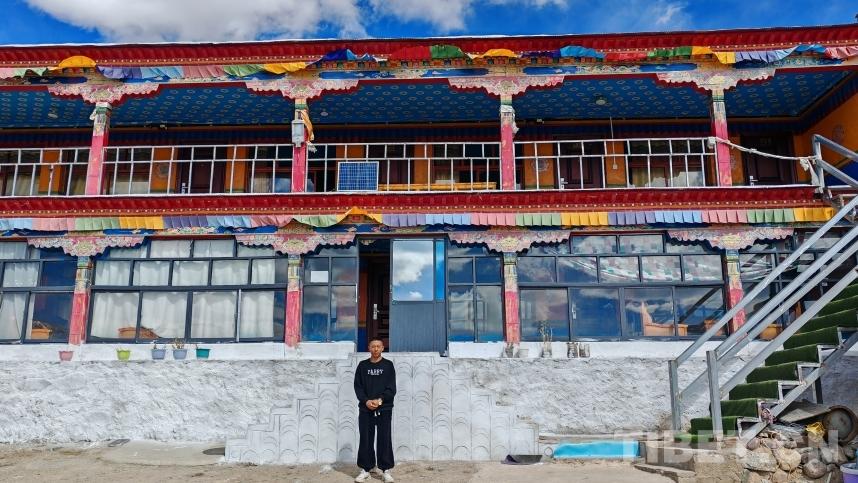
Path to Better Life for People in Ombu Community, Nagqu
Yomzhong, at the age of 26, runs his own homestay beside Tangra Yumco Lake.
Editor’s Choice
- China Has the Most Authoritative Voice on Tsangyang Gyatso—Exclusive Interview with Pasang Norbu
- Cultural Continuity Rooted in China: The Cultural Heritage of Tsangyang Gyatso Must Be Preserved from Interference
- Boarding schools promote educational equity in China's plateau regions: experts
- The Fifth Reting Rinpoche: Scripture as Weapon, Chanting as War Drum
- Tibetan Merchants’ Patriotism in War of Resistance Against Japanese Aggression